Music
Butoh: Beauty That Doesn't Have to Be Pretty
Sometimes it's worth looking into the shadow. Every day I work with form that should be useful and clear. But in art I look for something completely different - rawness and authenticity. That's why I've long been fascinated by Butoh. It's the Japanese "dance of darkness" that stands in opposition to classical beauty, grace, and what we usually associate with dance.
What is it, exactly?
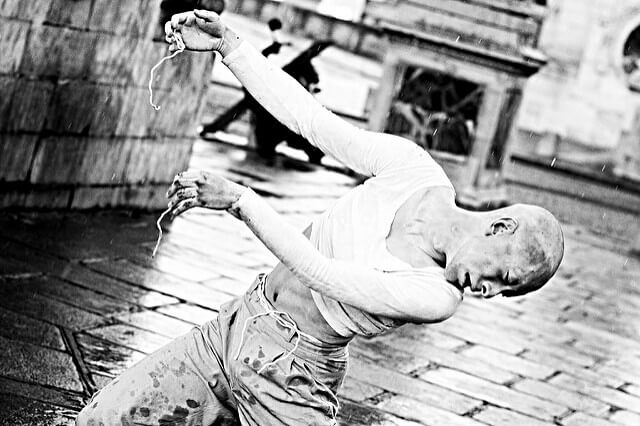
Butoh was born in Japan in the late 1950s. Artists like Tatsumi Hijikata and Kazuo Ohno rejected Western aesthetics (straight backs, jumps, lightness). They turned toward the ground. In Butoh, the center of gravity is low, movement is often extremely slow, and dancers' bodies - painted white (shira-nuri) - look like living sculptures or ghosts.
This is not about showing off physical prowess, but about drawing out what is hidden and imperfect in a human being.
3 examples worth starting with
I picked three recordings that best show the range of this genre. From intimate minimalism to total madness.
1. Kazuo Ohno - Pure emotion
This is a classic of the genre. In "Admiring La Argentina," Ohno does not perform complex figures. He works with mood, hands, and face. It's amazing how much content you can convey by doing so little. There is something eerie in it, yet also very human and moving.
2. Sankai Juku - Absolute control
If Ohno is improvisation and emotion, Sankai Juku is precision. The group is known for almost architectural compositions and incredible work with gravity (the famous performances where dancers slowly descend on ropes). It's a visual masterpiece - symmetric, cool, and hypnotic.
3. Dairakudakan - Golden chaos
Finally, something from the other end of the spectrum. Dairakudakan is spectacle, grotesque, and excess. Their performances, full of gold dust and strange props, balance on the edge of kitsch and ritual. It's Butoh in a wild, loud, and visually overwhelming form.
Why am I writing about this?
Because it's a perfect mental reset. Butoh reminds us that aesthetics do not end where something is "pretty" and "pleasant." Sometimes what is rough, slow, and difficult to take in stays with us longer than the most polished but sterile image.