Tech, Event Marketing, Design
3D Mapping: An Illusion That Sells
Screens are everywhere, so we stop looking at them. 3D mapping changes the rules by turning architecture and objects into a living canvas. See why this technology - despite high costs - is one of the most effective ways to capture attention in public space.
3D Mapping: When a facade becomes a screen
In the world of digital advertising, there is a belief that only what is interactive and clickable makes sense. 3D mapping disproves that theory. It is proof that passive viewing can be a powerful experience if the scale and execution "knock you out".
What is it, exactly?
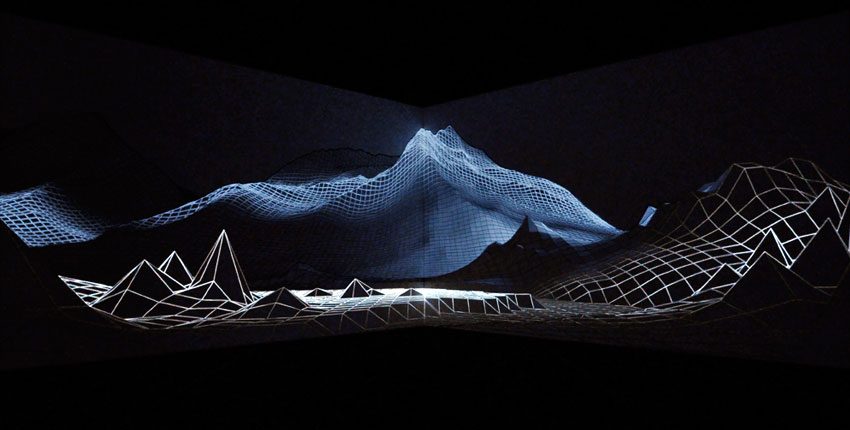
Technically speaking, 3D mapping (video mapping) is a projection technique where light is cast not on a flat screen, but on a three-dimensional object - a building facade, a car body, or even a wedding cake or a set piece.
The key is geometry. The image is prepared to perfectly match the architectural details of the object. Cornices, windows, columns, or embossing on a car hood become elements of the animation. This creates an optical illusion in which a static building starts to move, collapse, rotate, or change texture.
The architecture of attention
Advertising messages fight for every second of our attention. Billboards and citylights have become transparent - the brain has learned to ignore them. 3D mapping breaks this pattern because it enters the fabric of the city.
It stops the passerby. It offers a digital spectacle here and now. This is not an ad you scroll with your thumb. It is an event you participate in. The impact is huge, because the line between reality and animation blurs.
Cost vs. effect (earned media)
There is no point hiding it - it is an expensive game. In Poland, professional mapping is usually chosen by big players (automotive brands, cities promoting festivals, banks). Production costs start at several thousand and with complex shapes and long animations easily exceed 100,000 PLN.
So why is it worth it? Because of virality. A well-made mapping lives twice:
- Live - by impressing the audience on site.
- Online - as video content that spreads on its own.
Free earned media, hundreds of videos uploaded to Instagram or TikTok by viewers, often generate reach worth much more than the cost of the projection itself.
Not only buildings
Although we associate mapping mainly with big light festivals, the technology is coming "down to earth."
- Micro-mapping: Projection on products (e.g., sneakers in a shop window) that allows their color to change in real time.
- Gastro-mapping: Animations displayed on a restaurant table, integrated with the served dishes.
- Scenography: Instead of building physical sets, theaters and events increasingly "paint" space with light.
3D mapping is more than a projector. It is a tool that lets you suspend the laws of physics for a moment and turn an ordinary shape into a story.